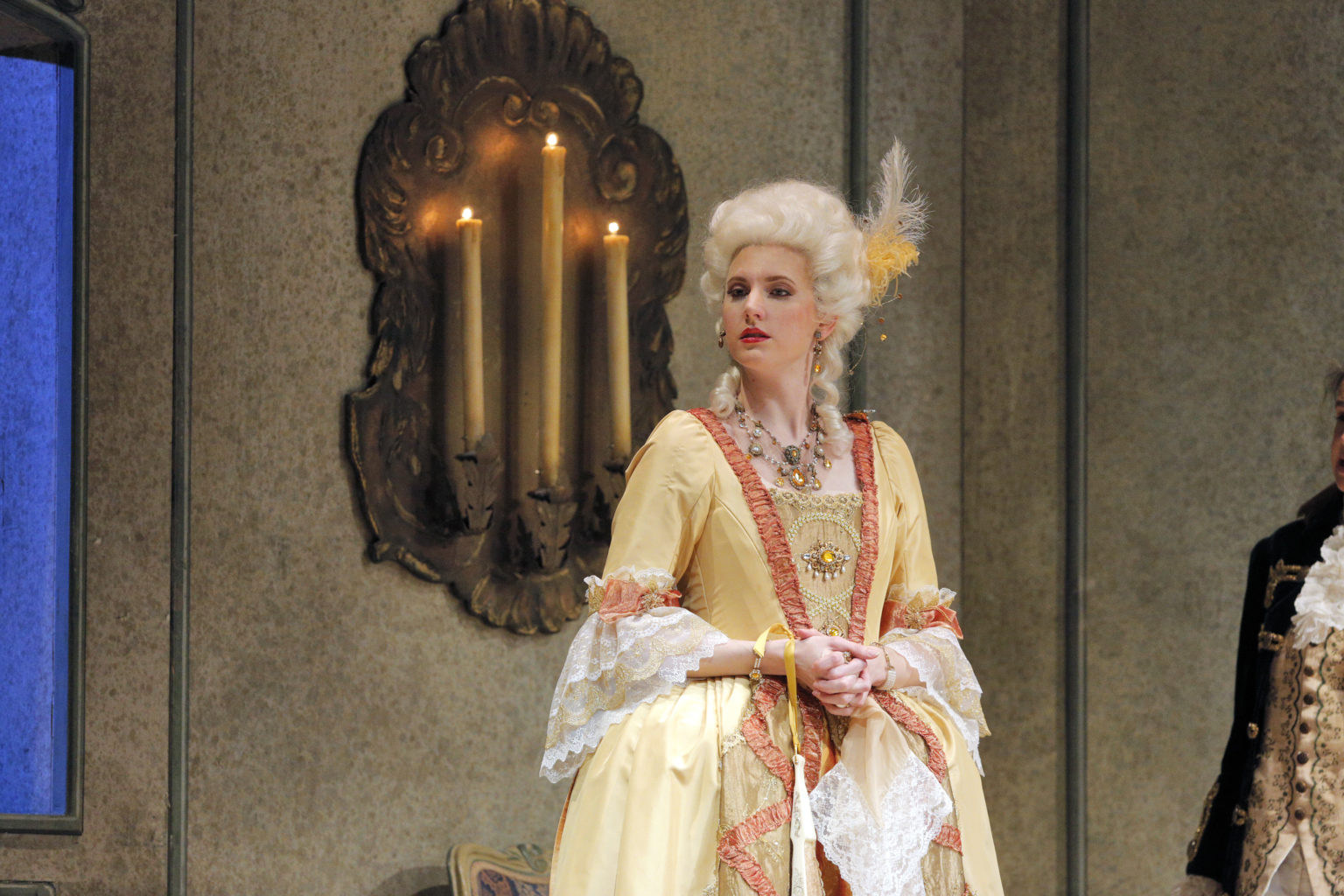
 Amanda Majeski in costume performing the leading role of the Marschallin in Der Rosenkavalier at the Lyric Opera of Chicago (Photo by Cory Weaver).From practice rooms to stages in Chicago and abroad, Amanda Majeski adores the music-making process. A celebrated interpreter of Wolfgang Amadeus Mozart, Richard Strauss, Richard Wagner and George Frederic Handel, Majeski harnesses her expertise to teach vocal performance students in weekly one-on-one sessions. She helps students develop their voice and performance skills for the School of Music’s operas and professional work.
Previously an adjunct faculty member, Majeski returned to DePaul as a professional lecturer this fall. She shares her performance experiences and advice for students in this Q&A.
What drew you to the world of opera?
I came to opera a little bit backwards. As a child, tap dancing was the most influential art form for me. In high school, I went into choir and auditioned for the high school variety show, but didn’t get in. I asked my mom to put me in voice lessons so I could improve my skills and be viable for next year’s show. When I found a teacher, I thought I was going to be singing all the musical theatre standards. Instead, she pulled out the Italian art song book. I fell in love with that style of music and the process of making music. The rest is history!
What helped you grow the most as a performer?
I found the process of making art to be something very intriguing and exciting for me. As artists, most of our time is in this process. It’s important to fall in love with it and approach it with a sense of humor, curiosity and willingness to make mistakes.
There’s also so much strength that comes from collaboration. I think back to the role of
Katya Kabanova, which I did at the Royal Opera House, Covent Garden and recorded with the London Symphony Orchestra and Sir Simon Rattle. During that experience, the preparation sometimes felt solitary, but then you get the opportunity to come out of the practice room and meet everyone you’re collaborating with. Because of that collaboration, belief in one another and mutual respect for the process, we created something truly special.
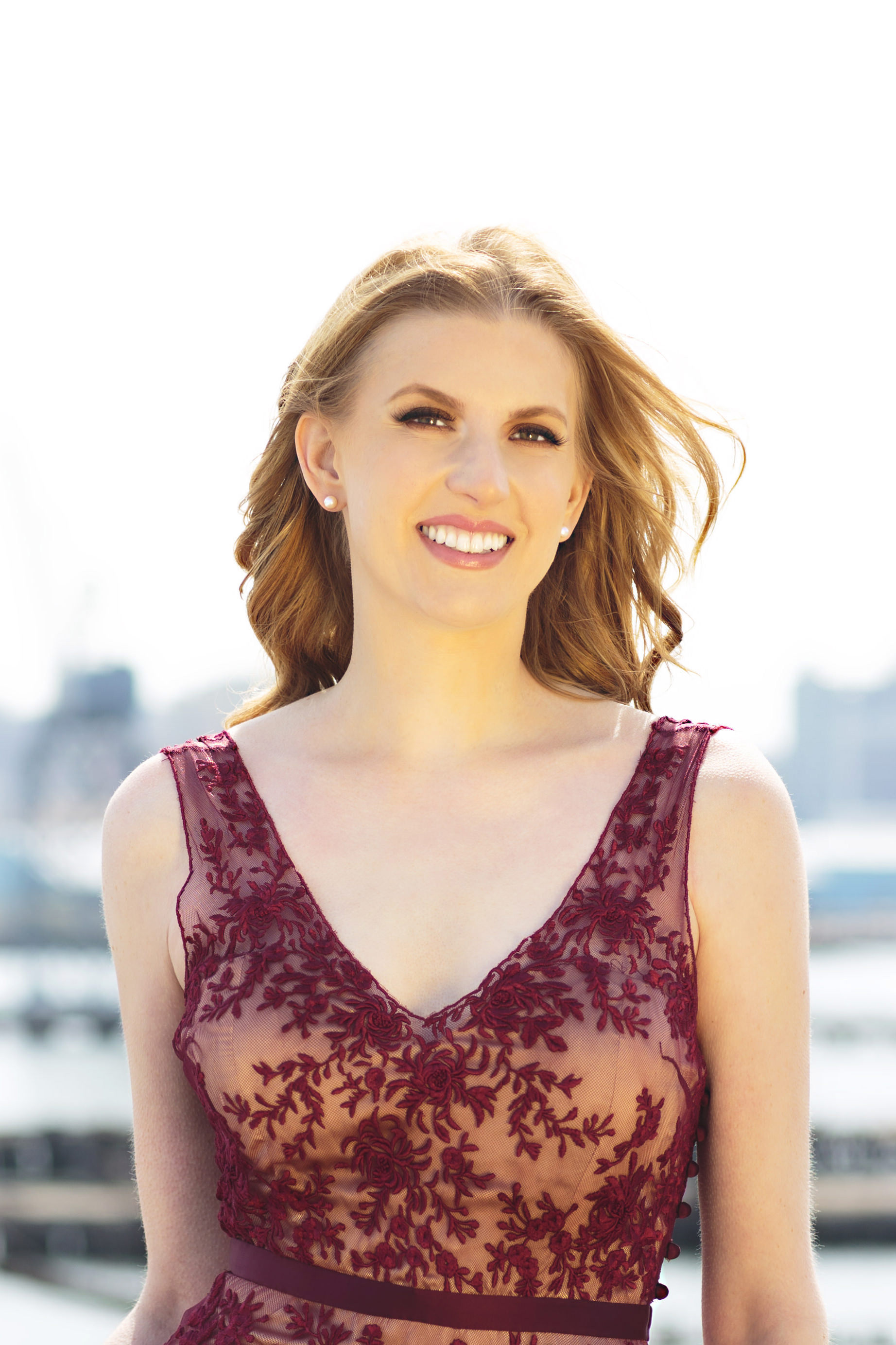 Amanda Majeski returned to DePaul as a full-time lecturer this Fall (Photo by Fay Fox).
What brought you back to DePaul?
When I was an adjunct faculty member at DePaul, I came directly from a performance career. I had made nice debuts and sang in grand places, but I felt at the time that I was missing something. Luckily, I was able to take on a couple of students here and really enjoyed the opportunity to interact with young singers and help them through their journeys to determine what fulfillment and success looked like for them.
When the opportunity arose to come back to DePaul, I thought about how much I love the community here. There’s so much shared investment in these students and an understanding that it takes a village to build an artist. The Vincentian model of service also aligns with what I think making great art is all about. So, to have the opportunity to come back to DePaul seemed like the right next move.
How do you bring your performance experience into the classroom?
Every time I go away on a gig, I try to bring some aspect of that back to my students. I can share some of my own experiences that may mirror feelings that students go through, particularly in terms of performance anxiety. Next quarter, I will perform an opera called “The Passenger” by Weinberg in Frankfurt, Germany. I’m very eager to get a group of cast members together for a Q&A with the students, so they can understand more about the life of a performer.
These connections are important to teach students about what it means to be self-employed because most singers are. How do you navigate managing your money? How do you handle paying taxes? How do you find housing when you go away for two months? What if you don’t speak the language? There’s so much to learn, not only about artistry, but about life as an artist.
What is one essential piece of advice you would give to vocal performance students?
One practical piece of advice is to learn languages because it will never be easier than today. We do have a language requirement for the voice degree at DePaul, but I always encourage my students to take it as far as they possibly can.
The more soulful advice I would give is to sing generously and sing to move others. If we seek to take from it, things like validation, worthiness and congratulations, we find that those things are fleeting. Even the most celebrated singers don't always get validation for everything they do. I did not have all this figured out as a student, but I’ve really worked to recognize that singing is my function. It’s what I do. It doesn’t create my worthiness as a human being. You are worthy because you are you.