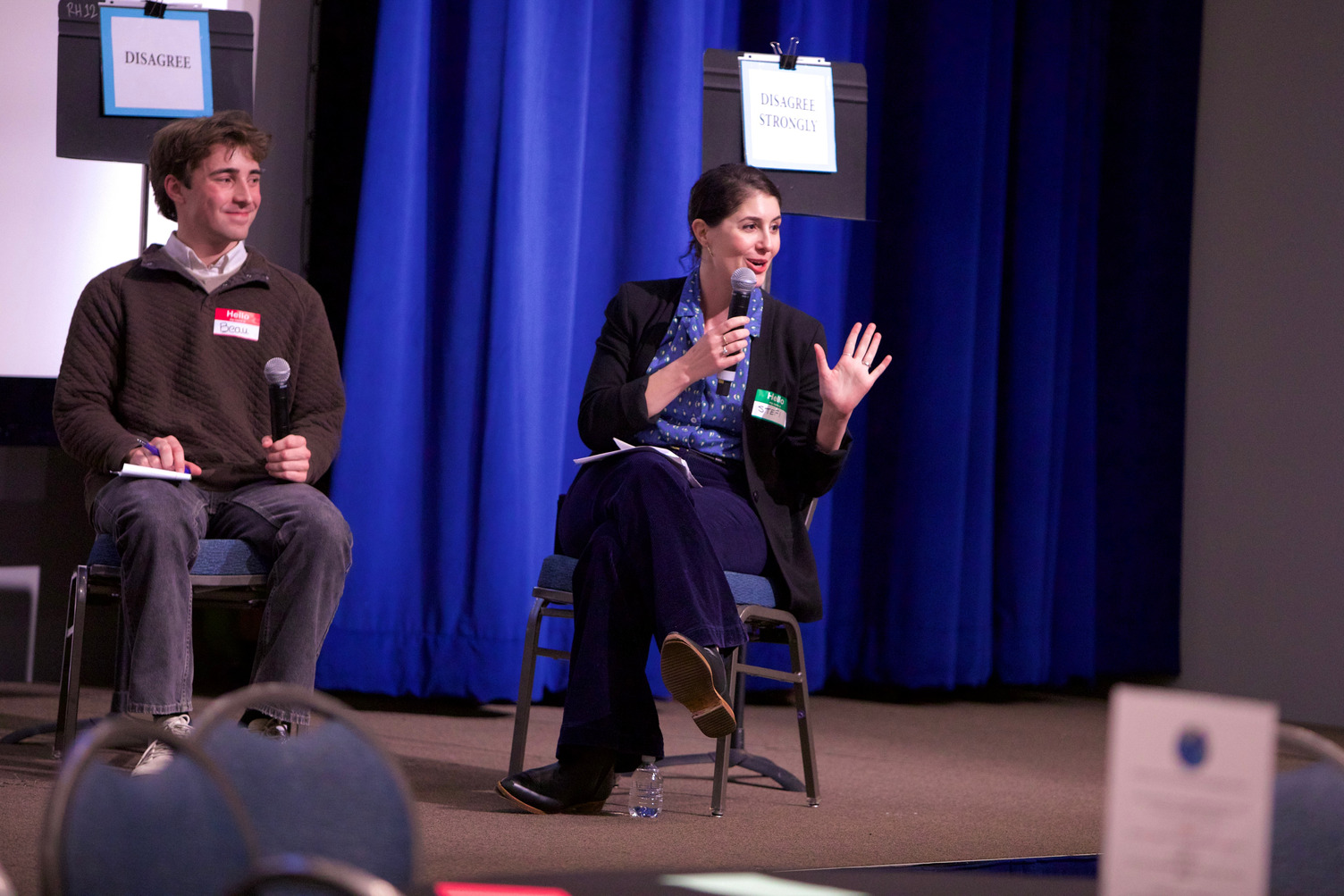
 Stefanie Demetriades on stage at the President's Dialogue Series on October 28, 2025, in the Lincoln Park Campus. (DePaul University/Marco Garcia)
Believing and spreading misinformation online is something many of us are guilty of, says Stefanie Demetriades, an assistant professor in the College of Communication. The first step to addressing misinformation is recognizing the gaps and flaws in how we process information and confirmation bias.
Recently, Demetriades was honored with the Fulbright Global Challenges Teaching Award for her course on misinformation and disinformation polarization and the relationship between technology and society.
This award will allow Demetriades to integrate a virtual exchange into her course, “Misinformation in Times of Upheaval.” This course will connect students across borders and continue the conversation on misinformation and how we, as a global society, recognize and combat its effects.
In this Q&A, Demetriades explores society’s susceptibility to misinformation and suggests strategies on how to minimize its effects.
What makes people prone to consuming misinformation?
Everybody agrees misinformation is a problem, but nobody thinks it's their problem. It’s always left to the other side, that it’s others’ responsibility to solve. But I think the most important first step is recognizing that we are all susceptible to it; no longer is this a us-versus-them problem. It’s a us problem.
There's plenty of misinformation out there, but the problem doesn't just start and end with being exposed to inaccurate claims. There are gaps and flaws in how we process information and believe what we want to believe; The much larger and more important question is about how we respond to it, and to what extent we're willing to be corrected.
What are some tips to help combat Misinformation?
There are a couple of things that we can do to build resilience and get more comfortable recognizing and pushing back against misinformation. Looking inward and acknowledging what you want the truth to be and then being willing to accept that may not be the objective fact on the ground, is a crucial step.
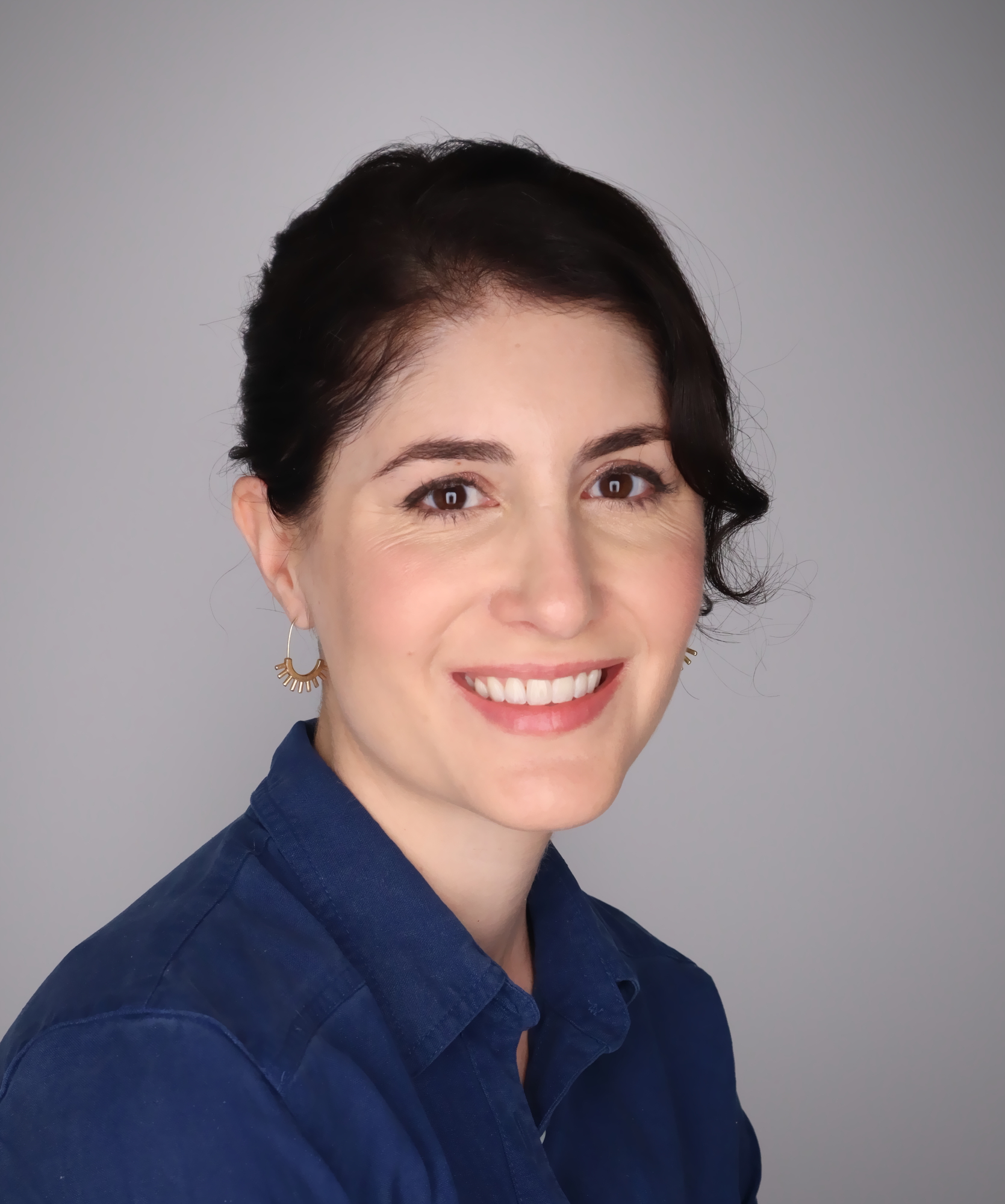 Stefanie Demetriades, Assistant Professor in the College of Communication, was recently awarded the Fulbright Global Challenges Teaching Award for her course on misinformation and disinformation.
 Take into consideration social media, you naturally pay more attention to content you believe in and that aligns and supports your beliefs. That doesn’t mean it’s wrong, but it should give you a moment to pause and think. Am I assuming that this is true because I want it to be, or is there strong evidence to back it up?
How has media, particularly social media, contributed to the constant tunnel of misinformation?
We have to remember that social media is designed above all to prioritize engagement. In practice, that often means that the most sensationalized and divisive content is prioritized, regardless of accuracy.
A couple of clear signals that social media researchers have identified are to pay attention to the kind of language and tactics that are used. The most powerful way misinformation spreads and gets its hooks in is by weaponizing fear and anger. If you come across social media content that is really sensationalized and leans into that anger and fear, that should be a mental speed bump to say, hang on a second, I know that’s a common feature of misinformation.
Another key is to differentiate personal stories and experiences from real evidence. In terms of social media and political discourse, there’s a lot of emphasis on anecdotes, which are important as they give a personal perspective. They’re engrossing, they're engaging and powerful, but they are not the same as evidence that we would consider scientifically rigorous. So, to be able to say, that’s a really powerful personal story, but that doesn’t necessarily mean their conclusion is valid.
What insight have you gained from teaching and having open dialogues about the danger of misinformation with students?
We are generally aware that this is an issue. We talk about it, we touch it in various contexts, and then that's the end of the conversation. What I try to do in my classes is break down the problem into segments and hope that gives people a bit more space to feel like they have some agency and hope in responding.
There’s always some way to connect it to personal experience. Everyone has sat across from a relative at Thanksgiving and yelled at each other about what’s true and what’s not and realized how unhelpful that is.
I am always collecting examples and insights on what works and doesn’t work. I’ve heard from my students and want them to continue to see misinformation as an actual thing we can identify, break down and evaluate. This makes it less overwhelming, even though it’s a complex problem.
What is one takeaway you want people to understand in terms of misinformation?
We must give ourselves a little break in this case and recognize that we’re all vulnerable. From there, it’s building resilience and not attaching ourselves too quickly and too firmly to claims or positions that we don’t have a strong basis for and say, I feel strongly, but I don’t know all the details.
Another key takeaway is that a bit more humility is necessary and recognizing that it’s not an embarrassing or shameful thing to be susceptible or to fall for misinformation. A lot of times, it's very convincing and a lot more compelling than the truth.